How to calculate PAYE in Nigeria (2026 guide)
A plain-English guide to Nigeria's PAYE tax under the Nigeria Tax Act 2025: the new ₦800,000 tax-free band, the 2026 rates, pension and NHF, with a worked example.
From 1 January 2026, the Nigeria Tax Act 2025 (NTA 2025) changed how salary tax is worked out. If you run payroll or just want to understand your payslip, here is what actually matters.
What is PAYE?
PAYE (Pay As You Earn) is the income tax your employer deducts from your salary every month and remits to the tax authority on your behalf. It is calculated on your taxable income, not your full gross pay.
The 2026 tax-free band
The biggest change is a ₦800,000 tax-free threshold: the first ₦800,000 of annual taxable income is taxed at 0%. The old Consolidated Relief Allowance (CRA) and the minimum tax were both removed.
Deductions that lower your tax
Two statutory contributions come out before tax is calculated, so they reduce your taxable income:
- Pension - 8% of your basic, housing and transport (your employer adds 10%).
- National Housing Fund (NHF) - 2.5% of your basic salary.
A worked example
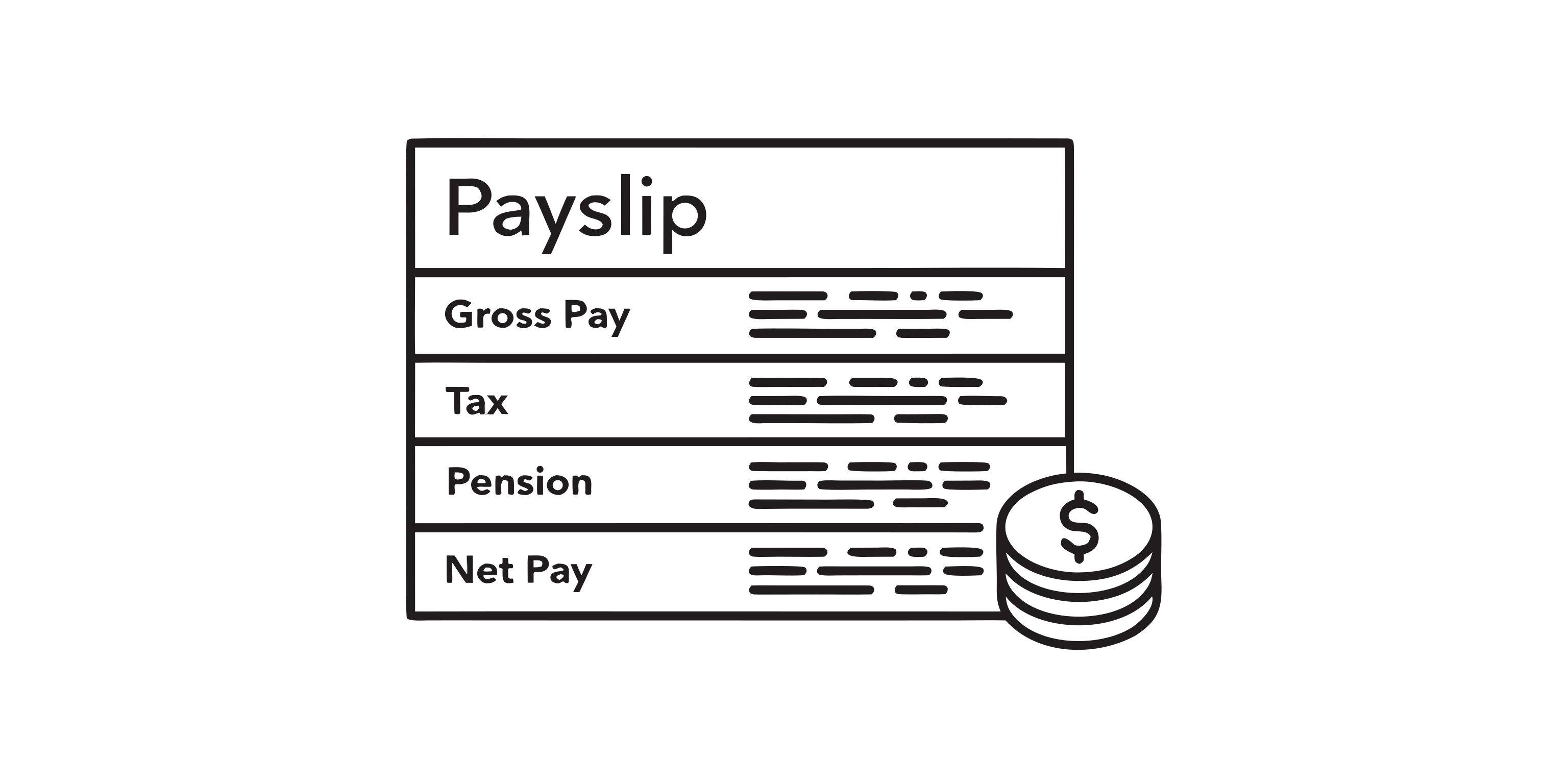
On ₦500,000 a month (₦6,000,000 a year), pension and NHF remove about ₦570,000, leaving ₦5,430,000 taxable. After the ₦800,000 tax-free band and the 15% and 18% slices, PAYE is roughly ₦767,400 a year - about ₦63,950 a month. Take-home lands close to ₦388,550 a month.
You can check your own figure in seconds with the free Nigeria PAYE calculator.