When the group chat stops being enough
Every small business starts on a group chat and a spreadsheet. The moment that stops working, and how Veridox quietly brings a growing team back into one place.

Every small business starts the same way. One group chat for the team, a spreadsheet for pay, a folder of files on someone's laptop, and a founder who holds the whole thing together in their head. For a while it is not just enough, it is wonderful. Everyone is close. Everyone is in the loop. A decision gets made in a single thread and by lunchtime it is done. There is a real intimacy to a business this small, and anyone who has felt it understands why people fall in love with building things.
Then you hire your fourth person. Then your fifth. And slowly, without any single dramatic moment, the way you run the place stops fitting the place you are running.
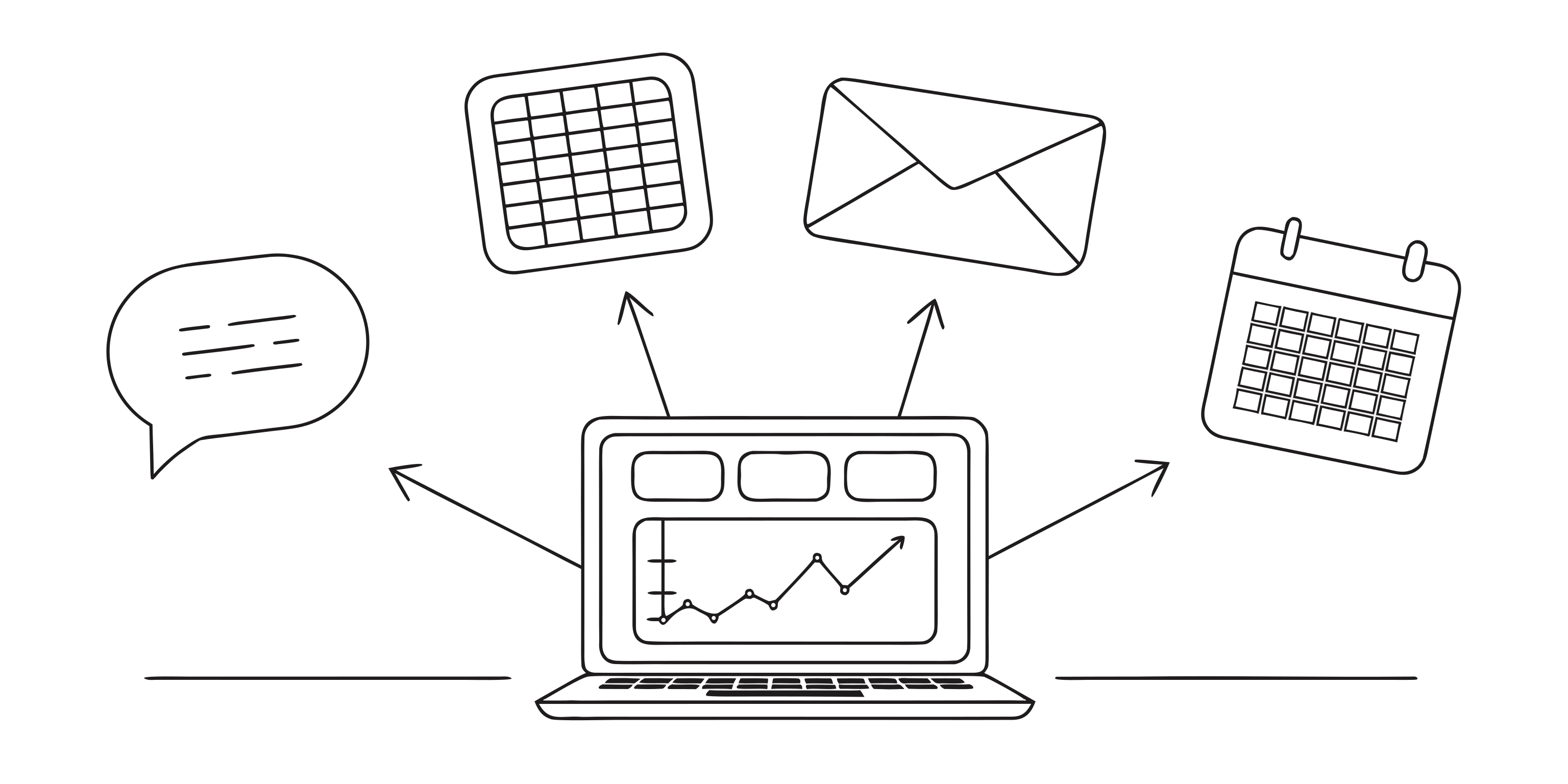
The group chat that once held everything now holds everything: birthday messages, a client complaint, three people asking for Friday off, a photo of lunch, and somewhere in there, a decision that mattered and got buried. The spreadsheet grows a tab that only one person understands, and that person is on leave. A payslip comes out wrong, and when someone asks why, the honest answer is that nobody can fully reconstruct how it was calculated. The closeness that felt like your superpower starts to feel like something slipping through your fingers.
What it is quietly costing you, the owner
If you run the business, you feel this first, and you feel it in your body. You have become the human database. Every question, every approval, every 'quick thing' routes through you, because you are the only place the full picture lives. You cannot take a real holiday, because the business does not run without your memory. You are the bottleneck, and the cruel part is that being the bottleneck feels like being responsible, so you do not even notice it is a problem until it is a big one.
Then there is the fear that sits underneath it all. You are not certain payroll is right. You are not certain you filed the thing you were supposed to file. You cannot say, with confidence, who is actually at work today versus who said they would be. If a good employee walked out tomorrow and claimed they were treated unfairly, you would struggle to show what really happened, because it lives in a chat that scrolls forever and a memory that does not. None of this is because you are careless. It is because you are running a growing company on tools that were never built to carry it.
And quietly, it leaks money. Hours lost to chasing and re-explaining. Overpayments and underpayments that nobody catches. Time you spend as an unpaid administrator instead of doing the one thing only you can do, which is grow the business. Absence and quiet under-work that you sense but cannot see. The cost is real even though it never shows up as a single line you can point to.
The compliance side deserves its own worry. Tax rules change, statutory contributions change, labour law changes, and a small business rarely has anyone whose whole job is to keep up. So you find out about a new requirement the way most owners do: too late, from a penalty, or from an employee who knew their rights better than your spreadsheet did. It is not that you did not care. It is that nobody can hand-run a growing payroll and also track every rule, in their spare time, without something eventually slipping through.
Picture a normal week. Monday you reconstruct who worked which shift from a scroll of messages. Tuesday two people book the same slot and a customer is let down. Wednesday someone's overtime is missed and they are quietly furious. Thursday a document a client needs is on the laptop of a person who has already gone home. By Friday you have done a full week of work that has nothing to do with the reason you started the company. Multiply that by every week of the year, and the real price of scattered tools is not a subscription you are avoiding. It is a slow tax on your time, your accuracy and your peace of mind.
What it is quietly costing your team
Your people feel it too, from the other side. What an employee wants most from a job, after being paid fairly, is the sense that the place is not chaotic, that someone is holding the thread. When pay is late or wrong, it is not a minor inconvenience, it is rent and school fees and trust. When they do not know who to ask, or their request disappears into a busy chat, they learn a quiet lesson: that raising things does not work here. So they stop.
They watch the person who shouts loudest get their leave approved while the quiet, reliable one waits. They notice there is no clear record of what was agreed, so 'you never told me' becomes a weekly argument nobody can win. They start to feel like a number in a system that cannot actually see them. And the ones with options, the good ones, the ones you most want to keep, are exactly the ones who leave first when a place feels disorganised, because they can.
Worst of all is when something goes genuinely wrong, a safety issue, harassment, something they are afraid to say out loud, and there is simply no safe way to raise it. Silence is not the same as everything being fine. It is often just the sound of people who have decided it is not worth the risk.
Add all of this up and you get the thing that quietly kills good small companies: attrition you cannot explain. People rarely leave in a dramatic exit. They leave a little at a time, in the effort they stop giving, the ideas they stop offering, the extra mile they stop walking, until one day the resignation letter simply makes official what left months earlier. And replacing them costs far more than any tool ever would: the hiring, the training, the lost knowledge, and the hit to morale of everyone who watched a good colleague give up.
The moment it breaks
For most founders there is a specific moment. A double-booked shift on your busiest day. A statutory deadline you find out about after it has already passed. A good person who hands in their notice, and when you ask why, the real answer is a hundred small frustrations that all trace back to the same root: the business outgrew the way you were running it, and nobody meant for it to happen. It is rarely dramatic. It is just the day you finally admit the group chat is not enough anymore.
Think about the newest person's first week, because it tells you everything. In a scattered setup they spend it collecting logins, guessing who to ask, and quietly deciding whether this place has its act together. In one workspace they find the handbook, the org chart, their tasks and their team on day one, and the message it sends is simple: you were expected, and we are organised enough to look after you. First impressions like that are cheap to give and expensive to fake.
One place to breathe
Bringing everything under one roof does not feel like buying software. It feels like exhaling. Attendance, pay, leave, tasks, documents, conversations and approvals stop living in ten different places and start living in one. The mental weight of remembering where everything is, and of being the person everyone opens like an app, simply lifts.
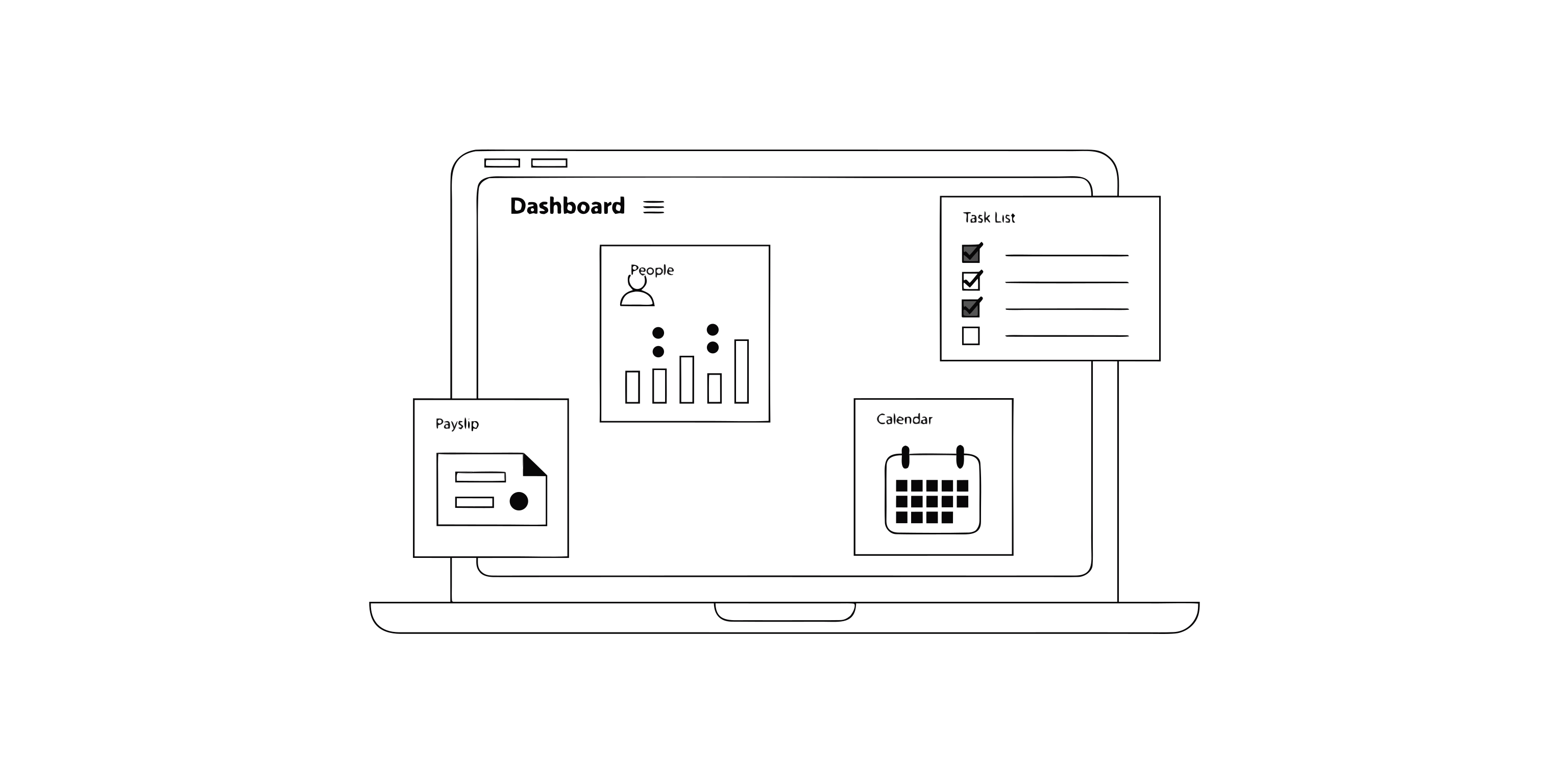
In practice it is small, undramatic relief, over and over. A manager can [see who clocked in](/help/clock-in-out) this morning without asking anyone. An employee can pull [their own payslip](/help/payroll-run) and see exactly how it was worked out, so the wrong-payslip argument disappears. A leave request follows [the right chain of people](/help/approval-workflow-builder) and comes back with a decision, not a 'did you see my message?'. A policy is published once and every person has actually [acknowledged it](/help/acknowledge-policies), so 'nobody told me' stops being true. And when someone needs to raise something they are afraid to say out loud, there is a [genuinely anonymous way to do it](/help/submit-report).
The magic is not any one of those features on its own. It is that they finally sit next to each other. The chat where you talk is the same place the work lives. The calendar, the documents, the tasks and the tax are not four logins and three passwords, they are tabs in one honest workspace. Context stops getting lost in the gaps between apps, because there are no gaps left for it to fall into.
Take payroll day, the one that used to eat a weekend. Instead of stitching hours together from three chats and hoping the maths holds, the time worked is already there, the deductions already calculated, the payslips ready to send. What was a monthly knot of anxiety becomes a task you finish before lunch. That is not a luxury. For an owner, a calm payroll day is the difference between dreading the end of the month and barely noticing it arrive.
What changes for you
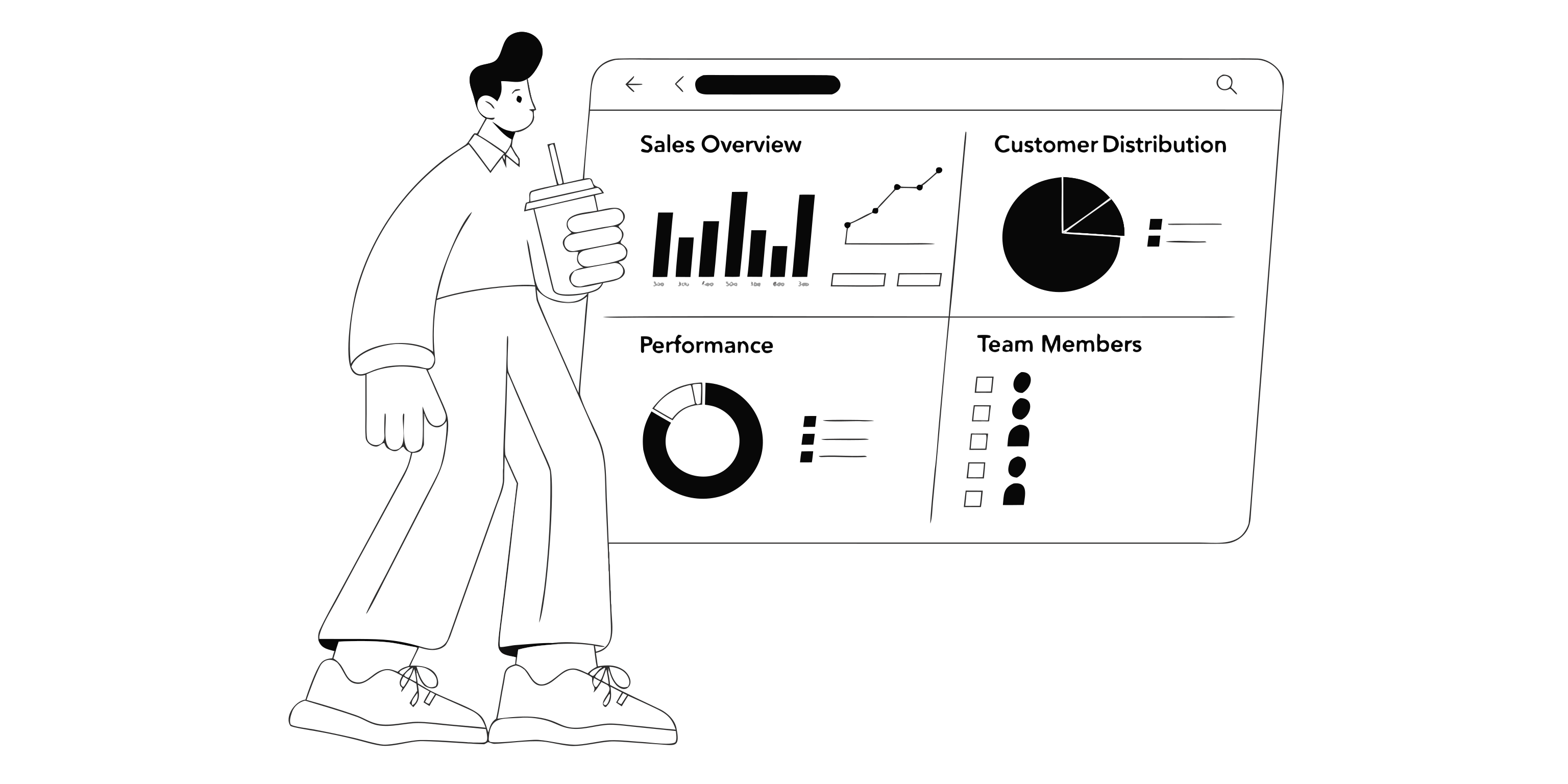
The first thing you get back is your head. You stop being the human database, because the picture no longer lives only in your memory. You can see what is happening without hovering over anyone, which is the whole difference between trust and surveillance. You get a clean record, so if you are ever challenged you can show what actually happened instead of trying to remember it. And, quietly, you get the thing you started the business for in the first place: time to work on it, not just in it.
What changes for them
Your team gets the small, underrated dignity of not having to chase. They know where things are and who to ask. They can see their own hours, their own payslips, their own requests, without going through a person. When they raise something, it goes somewhere and comes back. And when it matters, they have a safe way to speak. None of that sounds revolutionary. But to anyone who has worked somewhere chaotic, a place that is simply organised and fair feels a lot like being respected.
None of this needs an IT project or a big budget. You [create the company and invite the team](/help/invite-team), and everyone lands where they belong. While you are still small, it costs nothing, which matters when every naira counts. But the real reason to do it is not the price. It is that a business is a group of people trying to build something together, and they deserve to do it somewhere that can actually hold them. The group chat got you here. It is allowed to have been enough once. It is also allowed to stop being enough. That is not failure. That is growth.