The tools that grow up with you
Nobody starts a business dreaming of org charts. A story about growth, and how software like Veridox grows with you from five people to fifty and beyond.

Nobody starts a business dreaming about org charts. You start because you can do one thing well, and a few people believe in it enough to join you. In the beginning, structure is almost a dirty word. You move fast, you improvise, you make decisions in the hallway, and the absence of rules is not a bug, it is half the reason the good people came. There is nothing quite like a small team that trusts each other and just gets things done.
And then, if you are lucky, you grow. Which sounds like the happy ending. It is actually where the story gets hard.
Growth humbles you
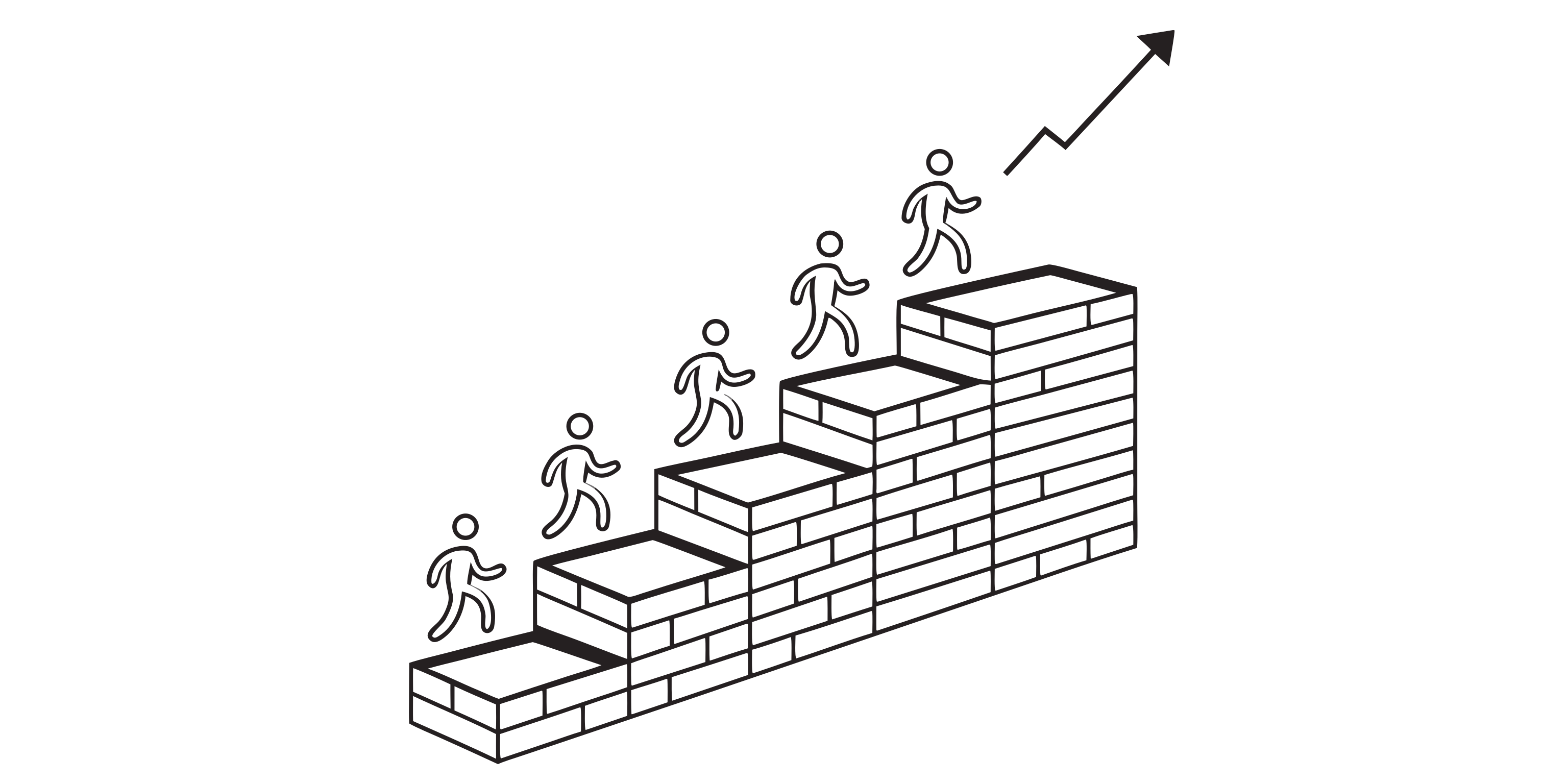
The processes you rolled your eyes at when you were five people become urgent when you are fifteen. The informal 'just ask me' that worked when everyone sat in one room breaks the moment half the team is remote, or on a different shift, or simply too many to hold in your head. Suddenly you need to know who approved what, who reports to whom, and who should ever be allowed near the payroll. The founder who once resisted structure finds themselves lying awake quietly craving it.
What growth does to the owner
From where you sit, growth is a strange kind of pressure. Every new hire is a win and a risk at the same time. The spreadsheet that ran payroll for five people is now a liability you are afraid to touch. You have real compliance exposure, because more people means more law, more filings and more ways to get it wrong, and the cost of getting it wrong has climbed right along with your headcount.
You start to feel the culture stretch. The thing that made the early team special, the closeness, the shared standard, the sense that everyone genuinely cared, does not automatically survive being copied fifteen more times. New people join and nobody is quite sure who owns their onboarding, so it happens a little differently every time, and a small piece of the magic leaks out with each inconsistent start.
And underneath it all sits a specific dread that every growing founder knows: the day you outgrow your tools and have to move. Exporting years of data. Learning a new system while still running the business. Retraining everyone. Praying nothing important breaks in the switch. It is such a miserable prospect that many businesses put it off long past the point of pain, limping along on tools that no longer fit, precisely to avoid it.
So they duct-tape instead. A second spreadsheet to patch the first. A new app for the one thing the old system cannot do, and now there are two sources of truth that quietly disagree. A part-time person hired mostly to keep the tools talking to each other. It feels cheaper than moving, and for a while it is, but every patch adds a little fragility, and the day something important falls through a crack between two half-connected systems, the bill for all that avoidance arrives at once.
There is a loneliness to it, too. In the early days you had co-conspirators: everyone knew everything and carried it together. As you grow, more of the weight of knowing lands on you specifically, the numbers, the risks, the decisions that cannot be made in a hallway anymore. Without a system that holds the truth for you, scaling quietly turns the founder into a single point of failure, right at the moment the business can least afford one.
What growth does to the team
Your people feel the growing pains from the other direction, and it is easy to miss. The freedom they loved starts to feel like fog. Who do I ask now? Who actually decides this? My request has been sitting with someone for a week and I do not even know who. The place that felt like a family starts to feel like a place where things get lost, and no one is quite sure whose job it was to catch them.
As layers appear, good people can start to feel unseen. In a team of five, everyone's contribution is obvious. In a team of thirty, the quiet, excellent person can disappear if there is no fair way to notice work, and nothing corrodes a growing company faster than the sense that effort is invisible and only the loud get ahead. People rarely leave a growing company because of the growth. They leave because the growth was handled in a way that made them feel like a cog.
There is a fairness question hiding in here as well. As a company grows, consistency becomes the difference between fair and unfair. If one manager approves leave in a day and another sits on it for two weeks, that is not a small annoyance, it is two employees having completely different experiences of the same company. If pay rules or promotion criteria live only in someone's head, people are right to suspect favouritism, because there is nothing to point to that says otherwise. Growth without shared structure does not feel like freedom to the people living inside it. It feels arbitrary.
Start small, on purpose
The kindest thing a tool can do for a young business is get out of the way. Early on you want the essentials and nothing else: no enterprise clutter, no dashboards you will never open, no features shouting for your attention. A handful of people should be able to run properly and pay nothing for it, which is exactly where Veridox begins, free for small teams with no card and no countdown, and then simply keep going as they grow.
The strange thing is how invisible the turning point is. There is no alarm the day you outgrow the group chat and the shared drive. It happens quietly, somewhere between the tenth and the twentieth person, when no single human can hold the whole picture in their head anymore. Most owners only notice it in hindsight, after a missed approval or a payroll mistake, when they realise the informal system that carried them this far has been failing for weeks. The businesses that scale well are simply the ones that put real structure in place a little before they desperately need it, not a little after.
Adding people without losing the soul
The frightening part of hiring is not the hiring. It is the fear of losing whatever made the team good in the first place. That is really a consistency problem, and consistency is something a system can protect. Done gently, bringing someone on board is one calm, identical step every time: their [role, department and reporting line](/help/departments) set from day one, a guided onboarding that collects their details straight into payroll, and the policies they need to read and [acknowledge](/help/acknowledge-policies) before their first week. Every new person gets the same clear start, so the team gets bigger without getting colder.
For the team, the deepest cost of disorganised growth is the sense that there is nowhere to go. When goals are vague and good work is invisible, ambitious people stop seeing a future and start seeing a ceiling. They do not ask for much: clear expectations, feedback that is written down, and the feeling that someone is paying attention to how they are doing. When the company cannot offer even that, the best people leave first, because they are the ones with the most options. Structure is not bureaucracy to them. It is proof that the place is serious about their growth as well as its own.
Structure that arrives when you are ready
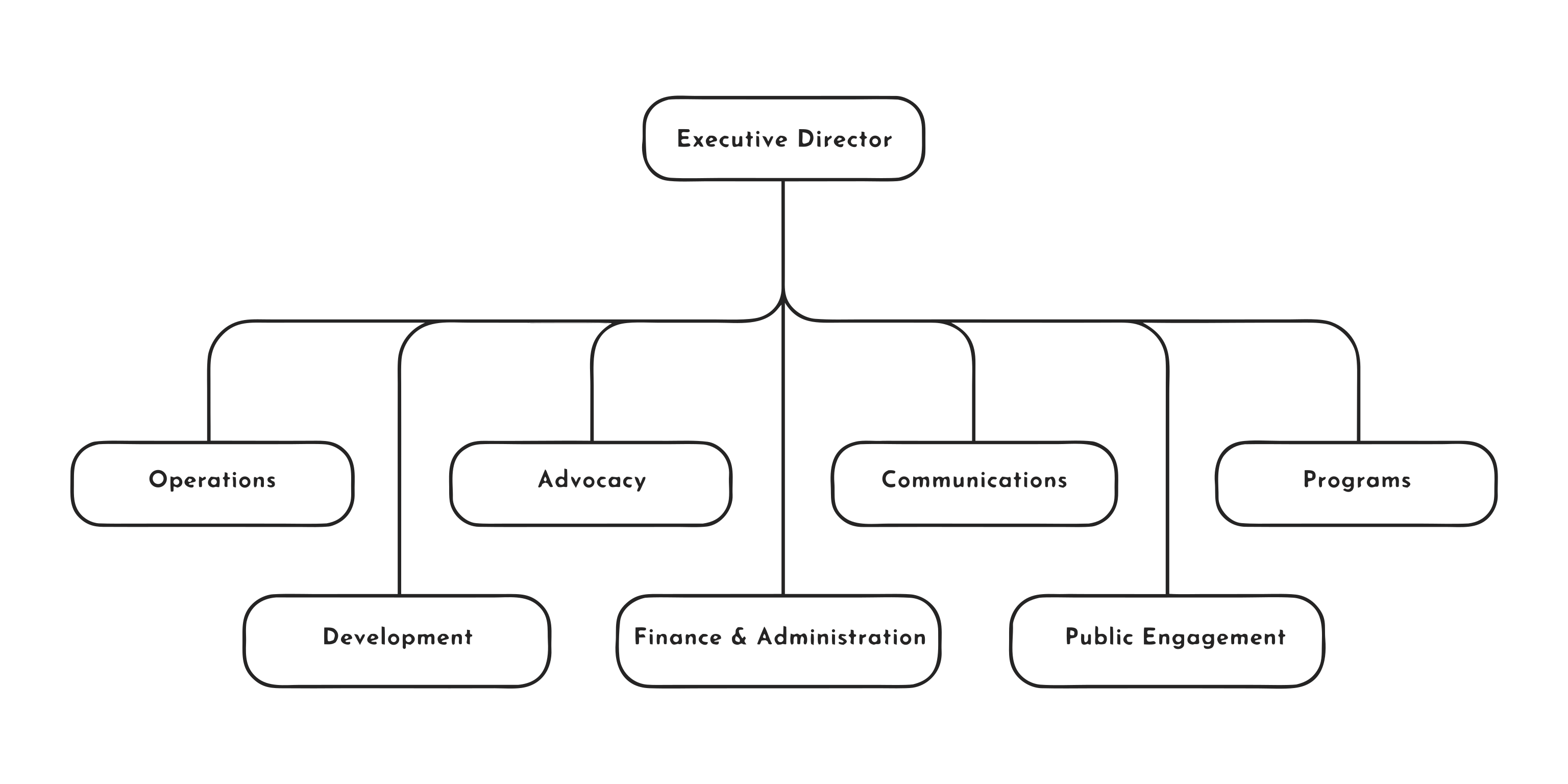
The best structure is invisible until you need it, and then it is simply there, not a wall you hit but a floor that appears under your feet. Reporting lines take shape as you draw them. [Permissions](/help/roles-explained) quietly make sure people see only what they should, so opening the payroll to a new manager does not mean opening it to everyone. [Approvals](/help/approval-workflow-builder) grow from a nod across the room into a proper chain that still moves quickly. And the moment performance needs to be more than a gut feeling, [KPIs and scorecards](/help/kpi-overview) give the quiet, excellent person a fair way to be seen. In Veridox you never install any of this on a grand launch day. It turns on as you grow into it.
More control as the stakes rise
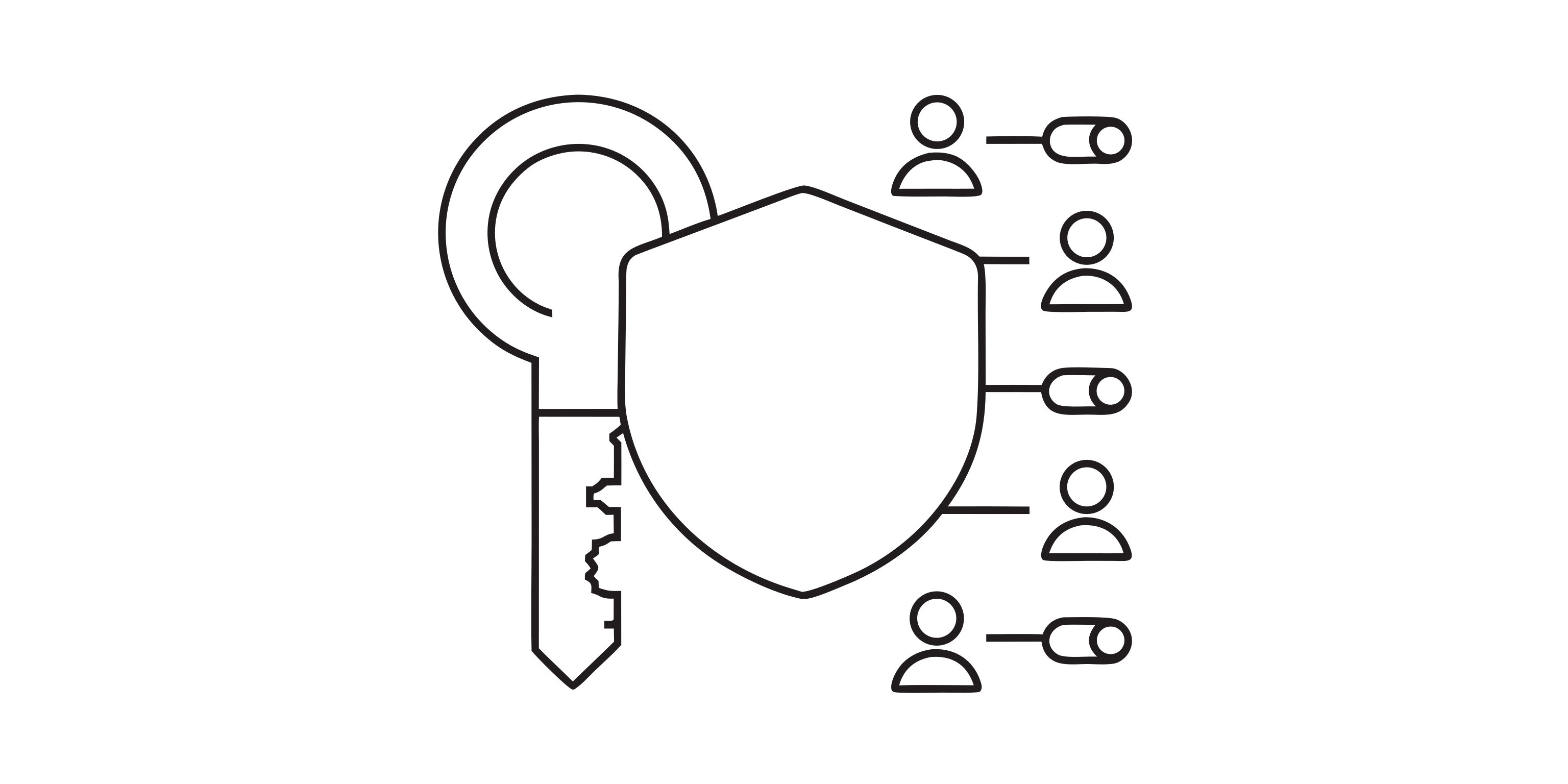
A bigger team carries bigger risks, and the guardrails have to grow with it. More people touching payroll and data means you need to know exactly who can do what, and to be able to prove, later, who did. That is why access tightens as you scale, and why a tamper-resistant [record of what happened](/help/audit-log) stops being a nice-to-have and becomes the thing that protects you in a dispute. The money has to make sense too: a [plan that scales by team size](/help/billing-overview) rather than charging you again for every feature every time you add a seat means growth never quietly punishes you for succeeding.
Not only for the small
It is tempting to read all of this as a story about tiny teams, but the same shape holds at the top. A large business is really a lot of small teams that have to move as one, and the pain simply changes clothes: instead of a lost message it is a policy that never reached one department, instead of a wrong payslip it is a country's statutory rules applied to the wrong people. Bigger organisations run many departments with their own managers and approval chains, sometimes several companies or locations under one roof, and far more people who must each see exactly the right slice of information and nothing more. The reason one tool can hold five people and five hundred is that the hard problems, clear roles, honest records, fair process and safe ways to speak up, do not actually change as you scale. Only their size does.
And leaders in a bigger business need something a founder in a small one gets almost for free: a way to see the whole without drowning in the detail. When you can no longer walk the floor and simply know how everyone is doing, you need the floor to report itself, honestly, in one place, so a director can understand attendance, performance and risk across the whole organisation without a dozen managers preparing a dozen different versions of the truth. That is not surveillance. It is the grown-up version of the thing every good owner has always wanted: to actually know how their people and their business are doing.
The migration you never have to do
Here is the quiet promise underneath all of it: the tool you choose at five people should still be the right tool at fifty. Not because it stays small, but because it grows in the same direction you do. No dreaded migration. No exporting your life and hoping. No retraining everyone on something new the very year you are trying to scale. The same home, just with more rooms as you need them.
Growth is hard enough. It will test your cashflow, your patience and your friendships. The software you run it on should not be another thing that breaks under the weight. It should be the part that quietly holds, from the first hire to the fiftieth, so the business can change and stretch while the ground under it stays steady. That is what it means for a tool to grow up with you, and it is worth far more than any feature list.